

Knock Knees in Adults: Is Surgery the Only Fix?
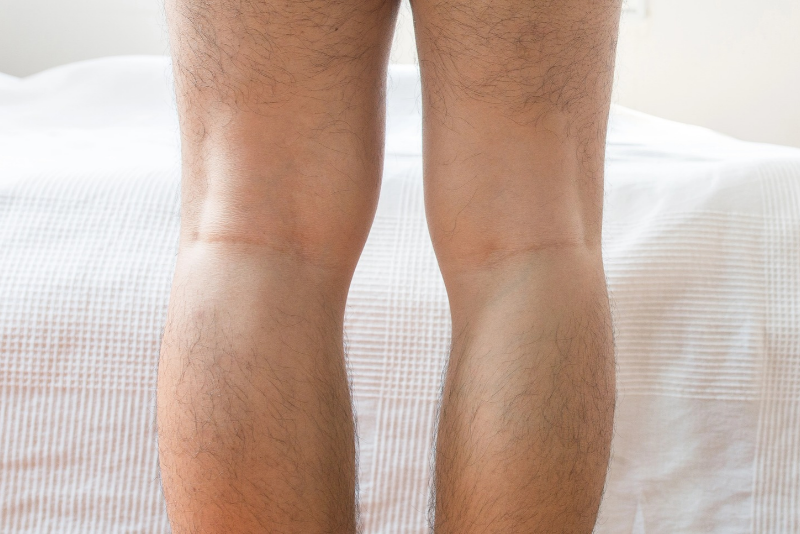
Once the growth plates have closed, exercises, braces, and orthotics cannot change the underlying bone alignment responsible for structural knock knees, or genu valgum. Conservative treatment may still help with pain, movement, and joint stability. When an adult needs structural correction of the deformity itself, treatment generally involves surgical realignment of the affected bone.
At The Height Lengthening Institute in Burbank, CA, Dr. Shahab Mahboubian evaluates adult knock knees to determine where the deformity originates and how it is affecting the knee. Treatment recommendations depend on the degree of misalignment, symptoms, joint health, and the patient's goals.
Understanding the difference between managing symptoms and changing skeletal alignment can make the available options much clearer.
Why Adult Knock Knees Cannot Be Structurally Corrected Without Surgery
What Changes After the Growth Plates Close?
The physis, commonly called the growth plate, is a layer of cartilage near the ends of growing bones such as the femur and tibia. During childhood and adolescence, growth at these areas allows the bones to lengthen and provides an opportunity to influence certain angular deformities through growth modulation.
After adolescence, the growth plates close and the bones no longer have the remaining growth needed for guided-growth techniques to correct an angular deformity. Braces, taping, and exercise may influence symptoms or movement mechanics, but they cannot reshape a mature femur or tibia to correct a fixed skeletal deformity.
With genu valgum, the source of the inward angle may be the femur, the tibia, or a combination of both. Identifying where the deformity originates is important because it influences treatment planning.
Can Exercises or Braces Straighten Knock Knees in Adults?
Exercise can make a meaningful difference in strength and movement without changing the shape of the bone.
Strengthening the muscles around the hips and knees may improve control during walking, stair climbing, and other activities. A brace may also change how forces are distributed while it is being worn. Neither approach, however, changes a fixed angular deformity in a mature femur or tibia.
That distinction is important. A patient may feel and function better with conservative treatment even though the underlying skeletal alignment remains unchanged.
Also Read: Knock Knee Deformity Symptoms, Causes, and Treatments
What Can Non-Surgical Treatment Do for Adult Knock Knees?
Not every adult with genu valgum automatically needs surgery. If the primary concern is discomfort or movement rather than structural correction, conservative care may have a role.
Custom Orthotics
Custom orthotics can change how forces travel through the foot and lower extremity while they are being worn. For some patients, that may improve comfort during standing or walking.
Orthotics do not change the underlying angle of the femur or tibia. Their role is therefore symptom management rather than structural correction.
Physical Therapy and Strengthening
Physical therapy can address several of the movement-related issues that may occur alongside knock knees.
When the knee angles inward, the kneecap may not track normally within the groove at the front of the femur. Targeted exercises may help improve movement control around the knee.
Hip strength can matter as well. Strengthening the gluteus medius and other muscles involved in controlling the hip may help reduce dynamic valgus, or inward collapse of the knee during movement. Quadriceps and hamstring conditioning can support knee stability, while appropriate flexibility work may help with tightness or fatigue.
These improvements can be valuable for the right patient. They do not, however, change the fixed skeletal angle responsible for structural genu valgum.
Non-Surgical Care vs. Surgical Realignment
The appropriate treatment depends on what needs to be accomplished. Conservative treatment focuses on symptoms and function. Osteotomy changes the alignment of the bone itself.
|
Treatment |
Primary Goal |
Structural Correction |
Role in Joint Loading |
Long-Term Considerations |
|
Physical Therapy and Exercise |
Improve strength, stability, and movement control |
No |
May improve movement mechanics and symptoms |
Requires continued participation to maintain conditioning |
|
Orthotics and Bracing |
Modify force distribution and improve comfort |
No |
May change loading while being used |
Benefit varies by patient |
|
Realignment Osteotomy |
Reposition the affected femur or tibia |
Yes, with the amount of correction determined individually |
Aims to restore a more appropriate mechanical axis |
Structural realignment intended to provide lasting correction; outcome varies |
|
Osteotomy With Height Lengthening |
Address alignment while adding bone length in selected patients |
Alignment correction plus individualized additional length |
Aims to improve alignment and joint loading |
More complex surgical treatment requiring individualized planning |
The decision is not simply between “doing nothing” and having surgery. An orthopedic evaluation can help determine whether symptoms can reasonably be managed without changing the bone or whether the deformity itself warrants consideration of realignment.
Also Read: Athletes With Knock Knees: Learn How Surgical Correction Can Help You
Surgical Realignment for Adult Knock Knees at The Height Lengthening Institute
Determining Where the Deformity Begins
Surgical planning starts with identifying the source of the alignment problem.
Two measurements described in the evaluation of knock knees are the mechanical lateral distal femoral angle, or mLDFA, and the medial proximal tibial angle, or MPTA. The mLDFA evaluates alignment at the lower end of the femur, while the MPTA evaluates alignment at the upper end of the tibia.
Together, these measurements can help determine whether the deformity primarily involves the femur, the tibia, or both.
That distinction matters. Correcting the wrong part of the leg would not address the actual source of the deformity, which is why careful imaging and surgical planning are important before an osteotomy is considered.
How Realignment Osteotomy Works
During a realignment osteotomy, Dr. Mahboubian makes a controlled cut in the affected bone and repositions it to improve alignment. Internal fixation, such as plates or telescopic nails, holds the bone in its corrected position while healing takes place.
The procedure changes the mechanical weight-bearing axis, the line extending from the center of the hip through the knee toward the ankle.
The goal is to restore a more appropriate mechanical axis and distribute forces across the knee more evenly. The amount and location of the correction depend on where the deformity originates, the condition of the joint, bone quality, and the patient's anatomy and goals.
An opening- or closing-wedge technique may be used depending on the individual deformity and surgical plan.
Can Knock Knee Correction Be Combined With Height Lengthening?
For selected adults who also want additional height, realignment may be planned together with limb lengthening.
Internal motorized systems such as the PRECICE nail are placed within the bone and gradually lengthened using an external control mechanism. In certain patients, this approach may allow the surgeon to address the knock-knee deformity while also adding bone length.
The amount of lengthening is not the same for every patient. Bone quality, overall health, anatomy, the location of the deformity, and the goals of treatment all factor into whether a combined procedure is appropriate and how much additional length may be considered.
Because combining alignment correction with lengthening makes surgical planning more complex, candidacy requires a comprehensive orthopedic evaluation.
Why Choose Dr. Shahab Mahboubian in Burbank, CA?
Specialized Limb Realignment and Deformity Expertise
Dr. Shahab Mahboubian, DO, MPH, is a board-certified orthopedic specialist whose fellowship training and experience focus on limb realignment and complex lower-extremity deformities.
His work includes angular deformities involving the femur, tibia, or both. Rather than approaching every case of genu valgum the same way, treatment planning takes the patient's anatomy, joint condition, symptoms, and goals into account.
Patients from Burbank and the greater Los Angeles area can meet with Dr. Mahboubian to determine where their deformity originates and which treatment options may be appropriate.
Also Read: Orthopedic Tips For Athletes With Knock Knees
Frequently Asked Questions
Is Surgery the Only Way to Fix Knock Knees in Adults?
If the goal is to change the fixed bone alignment responsible for adult genu valgum, surgical realignment is the structural treatment option described here. Physical therapy, orthotics, and other conservative approaches may help manage symptoms or improve movement without straightening the mature femur or tibia. Whether surgery is appropriate depends on the deformity, symptoms, joint health, and individual goals.
Can Physical Therapy or Special Exercises Straighten Adult Knock Knees?
Physical therapy cannot reshape mature bone, but that does not mean it has no role in treatment. Strengthening the muscles around the hips and knees may improve stability, movement control, and symptoms. For patients who do not need or are not pursuing structural correction, those improvements may still be worthwhile.
What Happens if Adult Knock Knees Are Left Untreated?
The effect varies considerably. In some individuals, altered loading may contribute to lateral knee pain, problems with kneecap tracking, stiffness, or cartilage wear over time. Others may have relatively few symptoms. An orthopedic evaluation can help determine whether the alignment is affecting the joint and whether treatment is warranted.
How Does Corrective Osteotomy Fix Adult Knock Knees?
The surgeon makes a controlled cut in the affected femur or tibia, repositions the bone to improve alignment, and stabilizes it internally while it heals. The exact procedure depends on where the deformity originates and the amount of correction required.
Can I Correct My Knock Knees and Gain Height at the Same Time?
In selected patients, alignment correction may be combined with limb lengthening using an internal motorized nail such as the PRECICE system. Candidacy and the amount of additional length that may be appropriate depend on the patient's anatomy, bone quality, general health, deformity, and treatment goals.
How Do I Schedule an Adult Knock Knee Evaluation With Dr. Shahab Mahboubian?
Contact The Height Lengthening Institute to schedule an evaluation with Dr. Mahboubian in Burbank, CA. If you have previous imaging or records from treatments you have already tried, bring them with you so the team can review your history.
Schedule an Adult Knock Knee Evaluation in Burbank
If you are concerned about knee pain, stiffness, or the alignment of your legs, an orthopedic evaluation can determine where the deformity originates and whether it is affecting the way forces travel through your knee.
At The Height Lengthening Institute, Dr. Shahab Mahboubian can review your anatomy, joint health, imaging, and goals to determine which treatment options are appropriate for you. If you have previous imaging or records of conservative treatments you have tried, bring them to your consultation so our team can consider them as part of the evaluation. Contact us today!