

History of Limb Lengthening: From Ilizarov to PRECICE Max
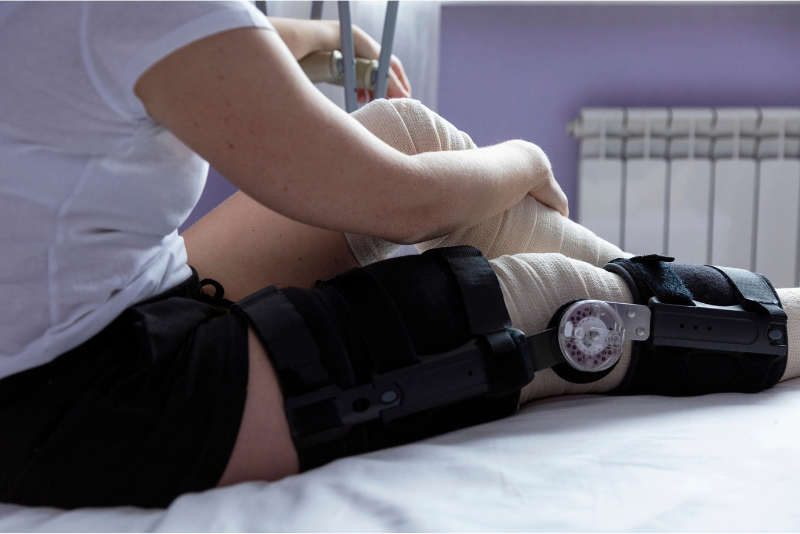
It started with bulky external wire frames and has evolved into fully internal magnetic nails with greater load-bearing capabilities. This evolution began in the 1950s. Dr. Gavriil Ilizarov, a Russian orthopedic surgeon, discovered that bone could regenerate itself under the right conditions through distraction osteogenesis. His work became the foundation for later methods.
Dr. Ilizarov’s method used external frames, but these carried a high risk of infection. Over time, surgeons moved from hybrid techniques to internal devices. Today, the Height Lengthening Institute uses the PRECICE Max limb lengthening system, which combines remote magnetic control with greater strength and rotational stability than earlier PRECICE systems.
This article walks through that timeline, from Ilizarov to PRECICE Max, and explains how fully internal nails changed modern stature lengthening.
The Pioneer Era: Dr. Gavriil Ilizarov & Distraction Osteogenesis
Limb lengthening as a medical field began in Kurgan, Siberia. Dr. Gavriil Ilizarov treated patients recovering from war injuries and bone infections. He did not have the tools used in major hospitals. What he found instead changed orthopedic surgery worldwide.
The Discovery of Tension-Stress Law
Dr. Ilizarov found that slow, gentle pulling on living bone makes the body grow new bone to fill the gap. This is called the tension-stress law. The same slow pull also makes blood vessels, nerves, and skin stretch and grow.
The Circular Ring Fixator
To use this idea, Dr. Ilizarov built a device with thin metal wires that passed through the bone. Rings on the outside held the wires and connected them with rods. Surgeons and patients turned these rods a small amount each day, often about 1 millimeter total. This device became known as the Ilizarov frame, and some surgeons still use versions of it today.
Challenges of External Fixation
The original external fixator worked, but it came with problems. The wires passed through skin and muscle for months. This led to a high risk of infection. Patients also dealt with joint stiffness, nerve irritation, and scars around each pin. Wearing a large metal frame for 6 to 12 months wore many patients down. This pushed researchers to look for better options.
Also Read: What Is the PRECICE Max System? A Look at the Next Generation of Limb Lengthening
Comparative Decision Framework: The 4 Generations of Lengthening Technology
Every stage of limb lengthening technology has built on the same discovery Dr. Ilizarov made decades ago. What changed is not the biology, but the hardware delivering it. Several major generations of limb-lengthening technology have followed his original method. The biology of distraction osteogenesis remains fundamentally similar, while the hardware and methods used to control lengthening have evolved.
|
Era & Hardware Architecture |
Primary Mechanism of Distraction |
Pin Tract Infection Risk |
Weight-Bearing Capability During Recovery |
Cosmetic & Scar Impact |
|
1950s–1980s: External Ring Fixator (Ilizarov) |
Manual mechanical rod turning on an external frame |
High. Wires pass through the skin for months |
Partial to full, but often painful due to pin pull |
Significant. Multiple pin scars along the entire leg |
|
1990s: Hybrid Lengthening Over Nail (LON / LATN) |
Manual external frame combined with a static internal rod |
Moderate. External pins are removed after the distraction phase |
Limited during the distraction phase |
Moderate. Several pin scars plus one small incision |
|
2010s: Internal Titanium Magnetic Nail (PRECICE 2) |
External Remote Controller (ERC) magnetic motor rotation |
No external pin tracts |
Non-weight-bearing or wheelchair-assisted until the bone heals |
Minimal. Just 2 to 3 micro-incisions |
|
Modern Era: Weight-Bearing Nail (PRECICE® Max) |
External Remote Controller (ERC) high-torque magnetic motor |
No external pin tracts |
Greater load-bearing capability; weight-bearing depends on nail size, patient factors, and surgeon guidance |
Minimal. Just 2 to 3 micro-incisions |
The Hybrid Era: Lengthening Over Nails (LON) and Mechanical Internal Rods
Surgeons wanted to shorten the time patients spent in external hardware. A new device emerged in the 1990s, combining the reliability of external frames with the comfort of an internal implant.
Lengthening Over Nails (LON)
The lengthening over nail method places a rod inside the bone at the same time as an external frame. Once the bone reaches the right length, surgeons remove the frame, and the internal rod keeps supporting the bone as it heals. Patients wore external hardware for far less time than with the original Ilizarov method.
Early Internal Mechanical Rods (ISKD & Albizzia)
Around the same time, engineers built early internal nails, such as the ISKD and Albizzia systems. These nails lengthened as the patient rotated the leg, turning a small internal ratchet. This removed the need for an external frame, but the growth rate was hard to control, and some patients felt sharp pain when the nail moved.
Also Read: Preparing for the Emotional and Physical Commitment of Height Surgery
The Modern Revolution: Remote-Controlled Magnetic Internal Nails
Magnets changed the equation. Once engineers found a way to drive a nail's motor through the skin using an external magnetic field, surgeons no longer needed any wire, pin, or rod crossing into the body. This change moved internal lengthening nails from early experiments to dependable, everyday surgical practice.
The PRECICE 2 System
The PRECICE 2 nail sits fully inside the bone and holds a small magnetic motor. A handheld device called an External Remote Controller (ERC) is held against the skin. It uses magnets to activate the internal mechanism, gradually lengthening the nail according to the prescribed distraction schedule without requiring external pins or manual adjustment of an external frame.
Eliminating Pin Tract Infections & Soft Tissue Scarring
Fully internal nails eliminated the external pin tracts associated with traditional external fixation. This removed the ongoing risk of pin-tract infection during the lengthening period and also reduced the number of visible pin-site scars. Internal limb lengthening remains surgery, however, and still carries risks that should be discussed during treatment planning.
The Present & Future: PRECICE Max and Advances in Weight-Bearing
Internal magnetic nails addressed two major drawbacks of external fixation: prolonged pin-tract exposure and extensive pin-site scarring. However, earlier internal nails still placed important limits on weight-bearing during the lengthening phase.
Overcoming Titanium Strength Limitations
Earlier PRECICE 2 nails were not designed to withstand full weight-bearing in femur and tibia applications during the lengthening phase. Patients therefore required weight-bearing restrictions and external support, such as crutches or a wheelchair, according to their treatment plan and stage of recovery.
The PRECICE Max System: Early Weight-Bearing & Enhanced Stability
PRECICE Max was designed with greater strength and rotational stability than PRECICE 2, increasing the implant's load-bearing capability. Depending on nail diameter, patient weight, bone quality, the stage of healing, and the surgeon's protocol, this may allow greater weight-bearing during treatment than earlier PRECICE systems. Individual restrictions still vary and should be followed closely throughout recovery.
Curious how this technology could apply to your goals? Schedule a consultation with the Height Lengthening Institute to discuss candidacy for PRECICE Max.
Why Choose the Height Lengthening Institute for Modern Lengthening
No implant adjusts itself. A surgeon still has to decide how fast to lengthen the bone, when to slow down if soft tissue is lagging behind, and when the bone is solid enough to bear full weight again.
Pioneer Leadership in Internal Lengthening Technology
Dr. Shahab Mahboubian of the Height Lengthening Institute has extensive experience with modern limb-lengthening techniques. That experience informs case planning, from implant selection and distraction rate to rehabilitation and ongoing monitoring throughout treatment.
Comprehensive Patient-Centered Rehabilitation Protocols
Surgery is only one part of the limb-lengthening process. Rehabilitation typically includes structured physical therapy to maintain muscle flexibility and joint motion, regular X-rays to monitor new bone formation and consolidation, and ongoing clinical evaluation throughout recovery.
Also Read: How to Choose the Right Surgeon for Your Teen’s Height Surgery
Frequently Asked Questions (FAQ)
How does modern PRECICE Max compare to the original Ilizarov method?
Both methods rely on growing new bone slowly, at about 1 millimeter a day. The Ilizarov method uses external frames with wires through the skin and muscle; PRECICE Max is a fully internal device controlled by magnets outside the body. That eliminates the external pin tracts associated with the Ilizarov frame, reduces pin-site scarring, and may allow earlier weight-bearing depending on the patient's implant and treatment plan.
What was the main drawback of external fixators like the Ilizarov ring?
The main drawbacks were high rates of pin infections, discomfort from skin tethering, joint stiffness, and lasting scars. Wearing a heavy frame for 6 to 12 months also took a physical and emotional toll on patients.
How does the External Remote Controller (ERC) work with internal nails?
The ERC is a handheld motorized device. It is held against the skin over the treated limb, where magnets inside the device pull on a magnet inside the internal nail. That magnetic pull turns a drive screw inside the nail, and the screw lengthens the bone in small, exact steps.
Why is PRECICE Max considered a major advancement over PRECICE 2?
PRECICE 2 requires weight-bearing restrictions during the lengthening phase because the nail is not designed to withstand full weight-bearing in femur and tibia applications. PRECICE Max uses a stronger design with greater load-bearing capability, which may permit increased or earlier weight-bearing depending on the patient's nail size, body weight, healing progress, and surgeon's protocol.
Are external frames ever used in modern limb lengthening surgery?
External frames are less commonly used for elective stature lengthening when an internal nail is appropriate because internal systems avoid external pin tracts and are generally easier for patients to manage during treatment. External fixation still has important applications in complex deformity correction and certain reconstructive cases.
How do I schedule a consultation to discuss PRECICE Max at the Height Lengthening Institute?
Contact the Height Lengthening Institute to check your candidacy for internal limb lengthening.
Schedule Your Stature Lengthening Evaluation at the Height Lengthening Institute
Every patient's bone anatomy is different, right down to bone density, limb length discrepancy, and joint alignment. A full clinical evaluation, including imaging and a review of your medical history, helps determine candidacy and which surgical approach may be appropriate for your anatomy and goals.
From Dr. Ilizarov's original wire frames to today's PRECICE Max system, limb-lengthening technology has continued to evolve in how surgeons control distraction, manage external hardware, and support patients throughout treatment. Contact the Height Lengthening Institute to schedule a consultation and start planning your treatment.
This article provides general medical information and is not formal medical advice. Individual diagnostic findings and candidacy vary. Consult a licensed orthopedic surgeon for an accurate evaluation and personalized treatment plan.