

PRECICE Max (PMax) Weight-Bearing: What Patients Should Know
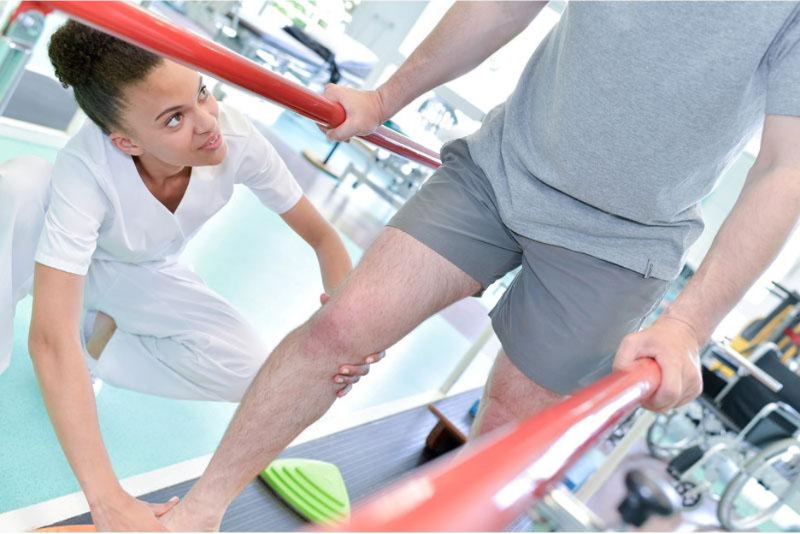
One of the biggest concerns people have before limb lengthening surgery is how mobile they'll be during recovery. Many prospective patients worry they'll spend months confined to a wheelchair or completely dependent on others for basic daily activities. These concerns often stem from information about older limb lengthening systems that required very strict weight-bearing restrictions.
The PRECICE Max (PMax) nail represents an important advancement in magnetic limb lengthening technology. Compared to earlier generations of magnetic lengthening nails, it was designed with a stronger implant that supports greater weight-bearing during recovery. While every patient's rehabilitation plan is different, this improvement has helped change what recovery can look like for many people undergoing limb lengthening.
At The Height Lengthening Institute, Dr. Shahab Mahboubian carefully evaluates each patient's anatomy, treatment goals, and surgical plan to determine the most appropriate implant and recovery strategy. Understanding how weight-bearing works after surgery can help patients approach treatment with realistic expectations and greater confidence.
What Determines Weight-Bearing After Limb Lengthening?
Although patients often ask how much weight the PRECICE Max nail can support, there isn't a single answer that applies to everyone.
Weight-bearing recommendations are based on far more than the implant itself. Your surgeon considers factors such as your anatomy, bone quality, the location of the lengthening procedure, the amount of planned lengthening, and how your bone is healing throughout recovery.
The implant is only one part of the equation. Bone healing, surgical planning, rehabilitation, and careful follow-up all influence how weight-bearing progresses throughout recovery.
Even two patients receiving the same PRECICE Max nail may receive different instructions because healing progresses at different rates. Recovery plans are designed around each patient's individual progress rather than following a universal timeline.
Also Read: How to Know If You’re a Good Candidate for PRECICE MAX
How PRECICE Max Differs From Earlier Lengthening Nails
One of the most significant improvements with the PRECICE Max system is its stronger implant design.
Earlier generations of magnetic lengthening nails required much stricter weight-bearing restrictions throughout recovery. Those limitations often meant patients relied on wheelchairs or remained significantly restricted for longer periods while new bone formed.
The PRECICE Max was developed to improve implant strength and support greater weight-bearing than earlier magnetic lengthening systems. While patients still follow carefully supervised rehabilitation programs, the stronger design gives surgeons greater flexibility when developing individualized recovery plans.
It's important to remember that stronger does not mean unrestricted.
Every patient progresses according to how their bone heals, not simply because of the implant being used.
Why Earlier Mobility Matters
The goal of increased weight-bearing isn't simply helping patients become more independent sooner.
Controlled weight-bearing plays an important role in the healing process itself.
When appropriate amounts of force are placed through the healing bone, the body responds by stimulating normal bone formation. This controlled mechanical loading encourages new bone to mature while supporting healthy healing throughout the distraction and consolidation phases.
Earlier mobility also benefits the muscles and joints surrounding the surgical area.
Physical therapy and guided movement help maintain joint flexibility, preserve muscle strength, and reduce stiffness that can develop during recovery. Remaining active within your surgeon's recommendations may also reduce some of the challenges associated with prolonged immobility.
For many patients, improved mobility also has practical and emotional benefits. Being able to move around the home more comfortably, participate in rehabilitation, and perform everyday activities with less assistance can make recovery feel significantly more manageable.
Also Read: The Psychology of Getting Taller: Self-Esteem After PRECICE Max
What Recovery Typically Looks Like
Recovery after limb lengthening occurs in stages, with each phase focusing on different goals.
Shortly after surgery, the body begins healing while the distraction phase starts. During this period, the PRECICE Max nail is gradually lengthened using an External Remote Controller, allowing the bone to separate slowly while new bone forms between the segments.
Throughout this process, patients work closely with their surgical team and physical therapist.
As healing progresses, mobility typically improves gradually. Many patients transition through different levels of assisted walking using crutches or a walker while their surgeon monitors bone formation with regular follow-up visits and imaging.
Once the desired length has been achieved, attention shifts to the consolidation phase. During this stage, the newly formed bone continues to harden and strengthen until it can safely support normal daily activities.
Because every patient's biology is different, recovery timelines vary. Some patients progress more quickly, while others require additional time before advancing to the next stage. Individualized follow-up allows the recovery plan to evolve based on objective healing rather than fixed dates.
What Greater Weight-Bearing Doesn't Mean
One of the biggest misconceptions about the PRECICE Max system is that a stronger implant allows patients to return immediately to normal activity.
That isn't how recovery works.
Running, jumping, heavy lifting, sports, and other high-impact activities remain restricted while new bone continues to mature. Progressing too quickly can place unnecessary stress on both the healing bone and the implant.
Instead, activity levels increase gradually based on clinical examinations and imaging studies that show how well the new bone is developing.
The goal isn't to return to full activity as quickly as possible. It's to increase weight-bearing safely while giving the new bone the time it needs to heal properly.
Why Recovery Plans Differ Between Patients
No two limb lengthening procedures are exactly alike.
Factors including bone quality, the amount of planned lengthening, whether the femur or tibia is being treated, overall health, and individual healing all influence postoperative recommendations.
Even patients undergoing similar procedures may recover at different rates.
This is why Dr. Mahboubian develops personalized rehabilitation plans rather than relying on standardized protocols. Throughout recovery, recommendations are adjusted as healing progresses to help patients advance safely without placing unnecessary stress on the surgical site.
The Importance of Choosing an Experienced Limb Lengthening Surgeon
The PRECICE Max nail is only one component of a successful outcome.
Equally important is the experience of the surgeon selecting the implant, performing the procedure, monitoring bone formation, and guiding rehabilitation throughout recovery.
Choosing the appropriate implant requires careful planning based on detailed imaging and an understanding of each patient's anatomy. Just as importantly, postoperative recommendations must balance mobility with protecting the newly forming bone.
At The Height Lengthening Institute, recovery is monitored through scheduled evaluations and imaging so rehabilitation progresses according to how each patient heals rather than according to a predetermined schedule.
Also Read: Top Reasons Why You Shouldn't Delay Height Increase Surgery
The Bottom Line
The PRECICE Max nail represents an important advancement in limb lengthening because it provides greater implant strength and supports greater weight-bearing than earlier generations of magnetic lengthening nails. While this has improved recovery for many patients, the implant itself does not determine how much weight any individual should place on the leg.
Safe weight-bearing is always determined by your surgeon based on your anatomy, healing progress, procedure, and ongoing evaluation throughout recovery.
If you're considering cosmetic limb lengthening and want to better understand what recovery may look like with the PRECICE Max system, scheduling a consultation with Dr. Shahab Mahboubian at The Height Lengthening Institute is the best place to begin. During your consultation, Dr. Shahab Mahboubian will evaluate your anatomy, treatment goals, and overall health to determine whether the PRECICE Max system is appropriate for you and explain what recovery may realistically look like based on your individual treatment plan.
FAQs
Does the PRECICE Max allow more weight-bearing than earlier magnetic lengthening nails?
Yes. The PRECICE Max was designed with a stronger implant that supports greater weight-bearing than earlier generations of magnetic limb lengthening nails. However, the amount of weight a patient can safely bear always depends on their surgeon's recommendations and individual healing progress.
Will I still need crutches or a walker after surgery?
Most patients use crutches, a walker, or other assistive devices during recovery. These aids help protect the healing bone while allowing mobility to increase gradually as recovery progresses.
Can two patients with the same implant have different recovery plans?
Absolutely. Recovery recommendations are individualized based on factors such as bone healing, the surgical procedure, overall health, and clinical progress. Even patients with similar procedures may advance through rehabilitation at different rates.
Does a stronger implant mean I can return to normal activities sooner?
Not necessarily. While the stronger design of the PRECICE Max supports improved weight-bearing compared to earlier systems, high-impact activities remain restricted until your surgeon determines that the new bone has healed sufficiently.
Why is surgeon guidance so important during recovery?
Successful limb lengthening depends on more than the implant itself. Regular follow-up visits, imaging, physical therapy, and individualized weight-bearing recommendations help ensure the bone heals properly while reducing the risk of complications. Following your surgeon's instructions is one of the most important parts of a successful recovery.