

Precice Nail vs. Precice Max: Comparing Limb Lengthening Technology
If you're considering limb lengthening surgery, one of your biggest concerns may be how you'll manage everyday activities afterward. Will you need crutches or a wheelchair? When can you start walking? And does choosing a newer implant make recovery easier?
These are important questions because the implant used during surgery affects how much weight you may safely place on your legs while new bone develops.
The PRECICE Nail (PRECICE 2/2.2) and PRECICE Max are internal lengthening systems that use magnetic technology to gradually extend bone. Both avoid the external frames traditionally associated with limb lengthening, but they differ in construction and designed weight-bearing capacity.
PRECICE Max was developed to tolerate greater mechanical loading than earlier PRECICE designs. This may offer mobility advantages for appropriately selected patients, although it doesn't eliminate the need for walking aids, physical therapy, or careful monitoring.
At The Height Lengthening Institute in Burbank, CA, Dr. Shahab Mahboubian evaluates the patient's bone anatomy, surgical goals, and recovery requirements when discussing implant options.
How Does PRECICE Limb Lengthening Technology Work?
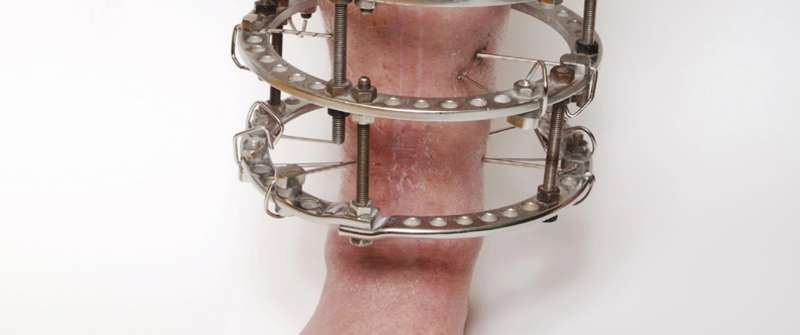
Traditional limb lengthening often relied on external fixation frames attached to the bone with pins passing through the skin. Modern internal motorized intramedullary nails allow lengthening through a device placed inside the bone.
During surgery, the surgeon performs an osteotomy, a controlled bone cut, and inserts the telescoping nail into the bone's central canal.
After surgery, patients use an External Remote Controller (ERC) positioned over the implant. The controller generates a magnetic field that activates the nail's internal mechanism, extending it in small increments.
As the bone segments separate, new bone tissue, known as regenerate bone or callus, develops in the gap.
Lengthening often progresses at approximately 1 millimeter per day, divided into smaller adjustments. However, the rate may change based on X-rays, bone formation, discomfort, and soft-tissue tolerance.
Both PRECICE 2/2.2 and PRECICE Max use magnetic lengthening technology. The differences become more significant when considering implant strength and permitted activity during recovery.
Also Read: PRECICE Max vs. PRECICE 2: What's Changed and Which Limb Lengthening Technology Is Right for You?
PRECICE 2 vs. PRECICE Max: What Are the Differences?
Implant Materials and Mechanical Strength
PRECICE 2/2.2 uses a titanium-based internal nail design. PRECICE Max incorporates a higher-strength titanium-alloy construction intended to tolerate greater mechanical loading.
That difference matters because the implant provides stability while the newly forming bone is still developing. During this period, excessive force can damage an implant or interfere with treatment.
A stronger nail may expand the range of activities permitted during recovery, but it doesn't make the healing bone immediately capable of supporting unrestricted movement.
Weight-Bearing Restrictions
Patients with PRECICE 2/2.2 generally face substantial weight-bearing restrictions during the lengthening phase. Crutches, walkers, or wheelchairs may be necessary to limit the force placed on the implant.
PRECICE Max was designed for greater loading capacity. Depending on the implant configuration and surgical circumstances, some patients may be permitted to bear more weight earlier.
For patients, this can affect practical activities such as transferring between a bed and chair or moving around the home.
However, PRECICE Max does not guarantee immediate unrestricted walking. Safe weight-bearing depends on the device's approved specifications, implant dimensions, patient weight, bone healing, and the surgeon's instructions.
Femur and Tibia Considerations
The femur (thigh bone) and tibia (shin bone) have different anatomical and mechanical characteristics.
The diameter and shape of the bone's internal canal determine whether a particular implant can fit securely. Available nail sizes and device indications must also be considered.
Preoperative imaging helps Dr. Mahboubian assess these factors before recommending an appropriate surgical approach.
PRECICE 2/2.2 vs. PRECICE Max Comparison
|
Feature |
PRECICE 2/2.2 |
PRECICE Max |
|
Construction |
Titanium-based internal nail |
Higher-strength titanium-alloy design |
|
Lengthening mechanism |
Magnetically controlled |
Magnetically controlled |
|
External Remote Controller |
Required for prescribed adjustments |
Required for prescribed adjustments |
|
Weight-bearing |
Generally more restrictive |
Designed for greater loading capacity |
|
Walking assistance |
Often requires crutches, walker, or wheelchair |
Assistance may still be necessary |
|
Daily lengthening |
Adjusted according to clinical findings |
Adjusted according to clinical findings |
|
Implant selection |
Based on anatomy and device specifications |
Based on anatomy and device specifications |
|
Physical therapy |
Required throughout recovery |
Required throughout recovery |
The primary distinction is designed load-bearing capacity, not the basic method of bone lengthening.
Neither implant removes the need for rehabilitation, follow-up imaging, or restrictions while the bone heals.
Also Read: What Is the PRECICE Max System? A Look at the Next Generation of Limb Lengthening
Why Does Weight-Bearing Capacity Matter During Recovery?
Limb lengthening affects much more than the bone itself. Muscles, tendons, nerves, and joints must adapt as the limb gradually becomes longer.
When patients have strict weight-bearing restrictions, activities that once seemed simple may require planning and assistance. Getting to the bathroom, preparing meals, or moving between rooms can become challenging.
An implant that permits greater loading may make certain movements easier. Still, any increase in activity must be approved by the surgeon.
Does PRECICE Max Make Bone Heal Faster?
Greater implant strength doesn't necessarily mean faster bone healing.
Wolff's law describes how bone adapts to mechanical stress. Appropriate axial loading can influence bone remodeling and the activity of bone-forming cells called osteoblasts.
However, these principles don't establish that PRECICE Max consistently produces faster bone formation or consolidation than PRECICE 2/2.2.
Healing depends on surgical technique, blood supply, the rate of lengthening, overall health, and other biological factors. Regular imaging helps the surgeon evaluate regenerate development.
What About Muscle Strength and Joint Mobility?
Limited activity can contribute to muscle atrophy, weakness, and joint stiffness.
Physical therapy helps patients maintain flexibility and function as the muscles and other soft tissues adapt to the lengthening process.
When permitted, weight-bearing and walking exercises may support mobility. However, patients shouldn't increase activity independently simply because their implant is designed to tolerate greater loads.
What Does Recovery Look Like With Either PRECICE Nail?
Recovery involves more than completing the daily lengthening adjustments. Both systems require a carefully monitored process.
Before surgery: Dr. Mahboubian reviews imaging, limb alignment, bone dimensions, medical history, and the planned amount of lengthening. Implant selection is based on these findings and the device's specifications.
Surgery and initial recovery: The selected nail is placed inside the bone following an osteotomy. Patients receive instructions about pain management, mobility assistance, and activity restrictions.
Gradual lengthening: After an initial postoperative period, patients use the ERC according to their prescribed schedule. Follow-up X-rays help determine whether the new bone is developing appropriately and whether adjustments are necessary.
Consolidation: Once the desired length is achieved, the regenerate continues to harden and mature. This stage often takes several months, and weight-bearing restrictions may change as healing progresses.
Rehabilitation: Physical therapy addresses joint motion, strength, mobility, and walking mechanics throughout treatment.
Potential complications include delayed bone formation, joint stiffness, nerve irritation, alignment problems, infection, and implant-related issues. Some patients may require additional procedures.
Even with PRECICE Max, recovery shouldn't be measured solely by how quickly you can put weight on your legs. Preserving joint function and achieving reliable bone healing are equally important.
Which PRECICE Nail Is Right for You?
The newest technology isn't automatically the best option for every patient.
At The Height Lengthening Institute in Burbank, Dr. Shahab Mahboubian evaluates the dimensions and alignment of the bone, the amount of lengthening being considered, and the patient's medical and functional needs.
PRECICE Max may offer advantages when greater loading capacity is appropriate and the implant fits the patient's anatomy. Other considerations may support a different implant or surgical plan.
During your consultation, ask about the walking aids you may need, the expected rehabilitation schedule, how often imaging will be performed, and which complications could affect recovery.
Understanding these details before surgery can help you prepare for the physical demands of limb lengthening.
Also Read: The Psychology of Getting Taller: Self-Esteem After PRECICE Max
Frequently Asked Questions About PRECICE 2 and PRECICE Max
What Is the Main Difference Between PRECICE 2 and PRECICE Max?
Both systems use magnetic technology to lengthen bone gradually. PRECICE Max has a higher-strength design intended to tolerate greater mechanical loading than earlier PRECICE nails. The amount of weight a patient may safely bear still depends on the implant configuration, surgical procedure, and healing progress.
Can I Walk Immediately After Surgery With PRECICE Max?
Not necessarily. Some patients may be permitted greater weight-bearing, but that doesn't mean unrestricted walking is safe. Crutches, walkers, or other assistance may still be required. Your surgeon will establish the appropriate restrictions.
How Does the External Remote Controller Lengthen the Nail?
The ERC generates a magnetic field that activates the implant's internal lengthening mechanism. This gradually extends the telescoping nail according to the prescribed schedule, allowing new bone to form between the separated bone segments.
Is PRECICE Max Safer Than PRECICE 2?
PRECICE Max was designed for greater mechanical loading, but that doesn't make it the safest choice for every patient. Both implants carry surgical and device-related risks. Appropriate selection depends on the patient's anatomy, the planned procedure, and a detailed clinical assessment.
How Much Height Can I Gain With PRECICE Technology?
The amount of lengthening depends on the bone being treated, your anatomy, soft-tissue flexibility, and what your surgeon considers safe. Neither implant guarantees a specific height increase. The treatment plan must account for bone healing, alignment, and long-term function.
How Do I Know Which PRECICE Nail Is Appropriate for Me?
A surgical consultation is necessary. Dr. Mahboubian can review your imaging, discuss the implant options appropriate for your anatomy, and explain the expected weight-bearing restrictions, rehabilitation requirements, and potential risks.
Schedule a Limb Lengthening Consultation in Burbank, CA
Choosing between PRECICE 2/2.2 and PRECICE Max involves more than comparing implant materials. Your anatomy, anticipated mobility, rehabilitation needs, and the condition of the developing bone all influence the decision.
At The Height Lengthening Institute, Dr. Shahab Mahboubian can review your goals, explain the available surgical options, and discuss what recovery may realistically involve.
Schedule a consultation at The Height Lengthening Institute in Burbank, CA, to learn more about your candidacy and the implant options that may be appropriate for you.
Medical Disclaimer: This article provides general educational information and is not a substitute for personalized medical advice. Implant selection, permitted weight-bearing, lengthening rates, and recovery outcomes vary. A qualified orthopedic surgeon must determine the appropriate treatment plan.