

What Is Leg Lengthening Surgery? How the Procedure Works & What to Expect
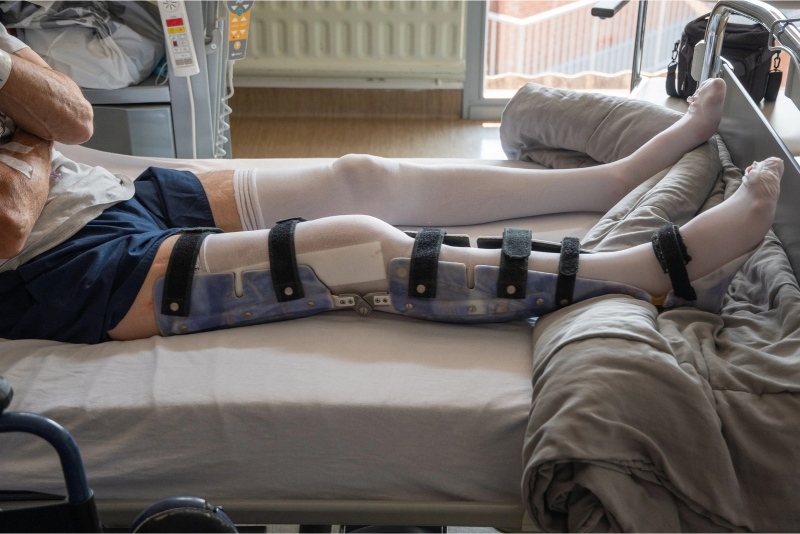
Leg lengthening surgery is an orthopedic procedure used to increase height or correct a limb length discrepancy through a biological process called distraction osteogenesis. At The Height Lengthening Institute in Burbank, CA, Dr. Shahab Mahboubian performs lower-extremity lengthening using an internal motorized nail, such as the PRECICE system.
During surgery, the femur or tibia is divided through a controlled osteotomy, and the internal nail is placed inside the bone. After an initial healing period, the nail gradually separates the bone segments so new bone can form in the developing gap. The amount of height that can be added depends on which bone is lengthened, the patient's anatomy, soft-tissue tolerance, and the surgical plan.
Understanding each stage of the process is important because the operation itself is only the beginning. Lengthening is followed by weeks of carefully monitored distraction and then months of consolidation as the new bone strengthens. Individual candidacy, results, and timelines vary, so an evaluation with your surgeon is necessary to determine what may apply to you.
What Is Leg Lengthening Surgery?
Leg lengthening refers specifically to lengthening a bone in the lower extremity, typically the femur in the thigh or the tibia in the lower leg. The procedure may be performed to address a limb length discrepancy or, in appropriately selected adults, to increase height.
Leg lengthening is one form of limb lengthening. Limb lengthening is the broader orthopedic category and can include the upper extremities as well as the legs. Both rely on the same underlying biological process.
The Science Behind Distraction Osteogenesis
Distraction osteogenesis uses the body's natural bone-healing response to create new bone. After the surgeon performs an osteotomy, healing tissue begins to develop between the two bone segments. Gradually separating those segments allows new bone to form within the expanding space.
As the bone is lengthened, surrounding muscles, nerves, blood vessels, and other soft tissues must adapt to the increasing length. This is one reason the rate of distraction, physical therapy, and ongoing monitoring are important throughout treatment.
Also Read: From Shoe Lifts to Surgery: The Evolution of Adult Height Enhancement
How Does Leg Lengthening Surgery Work?
With an internal lengthening system, treatment progresses through three main stages: surgery, active distraction, and consolidation. Clinical examinations and imaging allow the surgical team to monitor bone formation, alignment, joint mobility, and the response of surrounding tissues throughout the process.
Surgical Osteotomy and Internal PRECICE Nail Placement
During surgery, Dr. Mahboubian performs a controlled osteotomy of the femur or tibia and places a telescopic PRECICE nail within the bone's intramedullary canal. The nail is secured internally and later lengthened using an external remote controller.
Because the device is contained within the bone, there is no external frame or hardware passing through the skin. The internal system still requires careful postoperative management, rehabilitation, and monitoring as lengthening progresses.
The Active Distraction Phase
After surgery and an initial healing period, active lengthening begins according to the schedule established by the surgical team. An external remote controller uses a magnetic field to activate the internal nail.
A commonly planned distraction rate may total approximately 1 millimeter per day, sometimes divided into smaller lengthening sessions throughout the day. The actual rate is individualized and may be adjusted during treatment.
Throughout this phase:
- The controller is positioned externally over the limb.
- The surgical team establishes and reviews the distraction schedule.
- Serial X-rays help monitor new bone formation and alignment.
- Physical therapy helps maintain joint mobility and soft-tissue flexibility.
- The rate may be modified or temporarily paused if bone or surrounding tissues are not responding as expected.
Lengthening is therefore not simply a matter of reaching a predetermined number of centimeters. The response of the bone and soft tissues helps guide how the process progresses.
The Consolidation Phase
Once the planned length has been reached, active distraction stops. The newly formed bone, known as regenerate bone, then continues to mineralize and strengthen.
Consolidation typically takes several months, although the timeline varies by patient, bone, amount of lengthening, and healing response. Imaging is used to follow the developing bone and help determine when it is strong enough for progression in activity and weight-bearing.
Physical therapy remains important during this stage to maintain joint motion, muscle function, and mobility as recovery continues.
Also Read: History of Limb Lengthening: From Ilizarov to PRECICE Max
Femur vs. Tibia Lengthening: How Much Height Can Be Added?
The femur and tibia can both be lengthened, but they present different anatomical and rehabilitation considerations. The appropriate bone and target length are determined according to anatomy, body proportions, treatment goals, and how the tissues are expected to tolerate lengthening.
Femur Lengthening
The femur is the thigh bone. According to The Height Lengthening Institute's treatment framework, femur lengthening may provide up to approximately 8 cm, or 3.1 inches, of additional height.
Because the femur is surrounded by large muscle groups, rehabilitation includes close attention to hip and knee mobility, muscle flexibility, and strength. The amount that can safely be pursued remains individualized rather than determined solely by the maximum potential gain.
Tibia Lengthening
The tibia is the larger bone of the lower leg. Tibia lengthening may provide up to approximately 8 cm, or 3 inches, of additional height.
Tibia lengthening may be considered based on the patient's anatomy, proportions, desired height increase, and overall surgical plan. Because the calf muscles and Achilles tendon must accommodate the increasing length, rehabilitation places particular emphasis on ankle mobility and soft-tissue flexibility.
Can the Femur and Tibia Both Be Lengthened?
For select patients seeking a greater total increase, femur and tibia lengthening may be performed as staged procedures rather than as a single lengthening process. The source treatment framework identifies a combined potential gain of up to approximately 13 cm, or about 5.1 inches, when femur and tibia lengthening are staged.
A larger total height goal also means a more extensive treatment and rehabilitation process. Whether staged lengthening is appropriate depends on individual anatomy, proportions, health, response to treatment, and surgical planning.
Why Physical Therapy Matters During Leg Lengthening
Physical therapy is not simply an optional part of recovery. As the bone gradually becomes longer, muscles and other soft tissues must accommodate the change while joints continue moving through a functional range of motion.
Therapy is therefore incorporated throughout distraction and consolidation. The specific exercises and rehabilitation priorities depend on whether the femur or tibia is being lengthened and how the individual patient is progressing.
During femur lengthening, particular attention may be given to hip and knee mobility and quadriceps function. During tibia lengthening, maintaining ankle range of motion and flexibility through the calf and Achilles region becomes especially important.
The rehabilitation plan can change as treatment progresses. If joint motion becomes restricted or surrounding tissues become too tight, the surgical and therapy teams can respond rather than allowing the lengthening schedule to continue without adjustment.
How Is a Safe Lengthening Goal Determined?
The maximum amount a device can lengthen is not automatically the appropriate goal for every patient. Surgical planning takes into account anatomy, starting proportions, the bone being lengthened, joint mobility, soft-tissue flexibility, health history, and the patient's goals.
The response during distraction also matters. X-rays show how new bone is developing, while clinical examinations and physical therapy provide information about joint motion and soft-tissue tolerance. If progress differs from what was expected, the treatment schedule can be modified.
This ongoing assessment is why an individualized surgical plan is more useful than choosing a height increase based only on a target number of inches.
What to Expect During Recovery
Recovery from leg lengthening takes place over months rather than days or a few weeks. Patients move through different stages as the surgical sites heal, active distraction progresses, new bone consolidates, and mobility improves.
The timing of weight-bearing and progression in activity depends on the procedure and healing seen on imaging. Full weight-bearing generally resumes only after the surgeon determines that the developing bone has adequate strength.
Physical therapy and follow-up visits continue throughout this process. Recovery timelines cannot be predicted precisely in advance because bone formation, soft-tissue response, mobility, and rehabilitation progress differ by patient.
Also Read: Age Limits for Limb Lengthening Surgery: Minimum & Maximum Age Requirements
Why Choose The Height Lengthening Institute in Burbank, CA?
Dr. Shahab Mahboubian, DO, MPH, is a board-certified orthopedic surgeon whose practice focuses on limb lengthening and deformity correction, including cosmetic bilateral limb lengthening, limb length discrepancy, bow legs, and knock knees.
Treatment at The Height Lengthening Institute includes surgical planning as well as postoperative monitoring throughout distraction and consolidation. The Burbank team also uses individualized physical therapy protocols so rehabilitation can be adjusted according to mobility, bone formation, and soft-tissue response during treatment.
A consultation with Dr. Mahboubian provides an opportunity to discuss your goals, review your anatomy and medical history, and understand what a realistic treatment plan may involve.
Frequently Asked Questions
How long does the entire leg lengthening process take?
Leg lengthening takes place over several stages. Surgery is followed by active distraction and then a longer consolidation period while the newly formed bone strengthens. The overall timeline depends on the bone being lengthened, target length, healing response, rehabilitation progress, and individual treatment plan.
When can I walk after leg lengthening surgery?
Weight-bearing restrictions and progression are individualized. Your surgeon determines when and how much weight can be placed on the treated limb based on the procedure, internal nail, stage of treatment, and evidence of bone healing on imaging. Full weight-bearing generally does not resume until adequate bone strength has developed.
Why is physical therapy important during leg lengthening?
Physical therapy helps maintain joint mobility, muscle function, and soft-tissue flexibility while the limb gradually becomes longer. Therapy is adjusted throughout distraction and consolidation according to which bone is being lengthened and how the patient is progressing.
How does the surgeon determine how much my legs can safely be lengthened?
The target is based on more than the amount of height a patient wants to gain. Anatomy, body proportions, joint mobility, soft-tissue flexibility, health history, and the bone being lengthened all influence planning. The goal may also be adjusted during distraction based on bone formation and soft-tissue response.
What happens if the bone or soft tissues are not responding as expected?
The surgical team monitors progress with examinations, imaging, and physical therapy assessments. If bone formation is slower than expected or soft tissues are becoming too tight, the distraction rate may be modified or temporarily paused. Treatment decisions are based on the patient's response rather than continuing toward a predetermined target regardless of clinical findings.
Can both the femur and tibia be lengthened to increase height?
In select cases, femur and tibia lengthening may be performed as staged procedures for a greater total height increase. The Height Lengthening Institute's treatment framework identifies a combined potential increase of up to approximately 13 cm, or about 5.1 inches. Whether staged lengthening is appropriate requires individualized evaluation and planning.
Schedule a Leg Lengthening Consultation in Burbank
If you are considering cosmetic leg lengthening, an individualized evaluation is the appropriate place to determine what may be possible based on your anatomy, proportions, health history, and goals. Dr. Shahab Mahboubian and the team at The Height Lengthening Institute can explain the surgical options, expected rehabilitation, and considerations involved in your treatment plan.
Contact The Height Lengthening Institute in Burbank, CA, to schedule a consultation.
This guide provides general orthopedic educational information and is not formal medical advice. Individual candidacy, surgical complexity, recovery timelines, and height gains vary. Consult a board-certified orthopedic surgeon for an individualized evaluation and treatment plan.